Be yourself; Everyone else is already taken.
— Oscar Wilde.
This is the first post on my new blog. I’m just getting this new blog going, so stay tuned for more. Subscribe below to get notified when I post new updates.
Be yourself; Everyone else is already taken.
— Oscar Wilde.
This is the first post on my new blog. I’m just getting this new blog going, so stay tuned for more. Subscribe below to get notified when I post new updates.
By Akeem Polius
Laslie Harrod
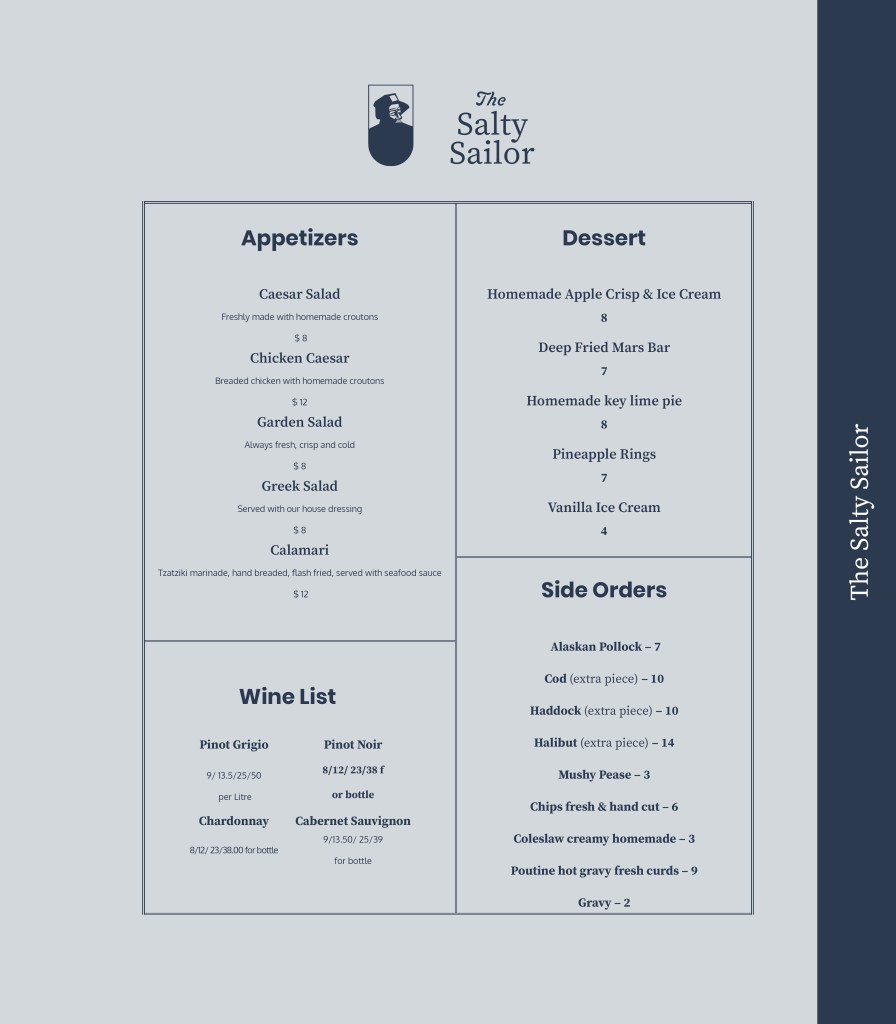
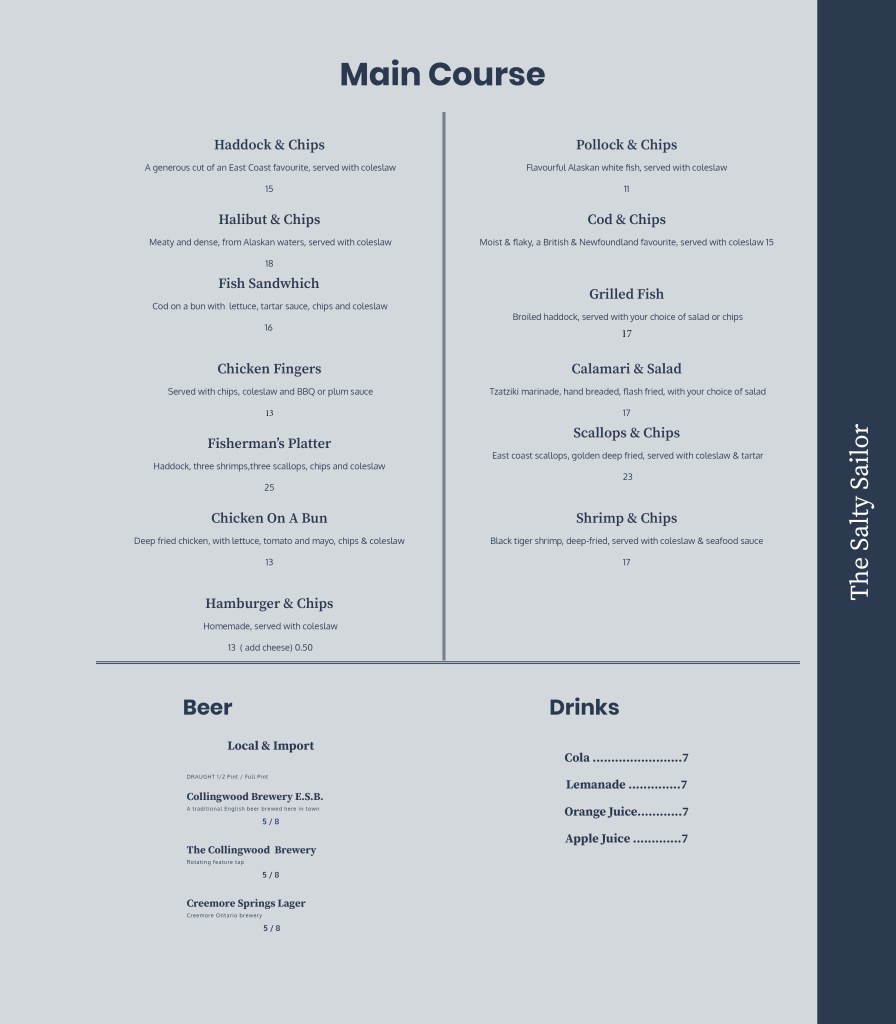
For this assignment, I was tasked with creating or redesigning a menu for any restaurant including an original one. The focus of this project was to effectively showcase a professional understanding of typography, hierarchy, and other design principles.
My goal was to design this menu using a minimal, modern, and clean style. These qualities were chosen simply because they felt different from what is normally done with a restaurant of this type. Traditional fish and chip shops are known for their rustic looks. The concept of creating a completely new fish and chips restaurant with a classy design seemed refreshing to me.
By using a mood board, I was able to explore other designs that captured the look I wanted. I also used mood boards to determine what colors, fonts, and layout would work for this design.

Using my mood board as a guide, I sketched mainly to figure out the best layout. Having sketched and chosen a layout, I began looking at other restaurant menus. Through this process, I was able to extract menu items that were relevant to my brand.
Having found enough menu items to populate my menu, I used font joy to find a font pair that I could use to complement the design. Several fonts were tried before I settled on Cormorant and Poppins simply because of their elegant and modern look.
After completing this assignment I notice that using two different fonts was ineffective. Using one font with different weights would have made for a more finished looking
When I completed this assignment, I realized that using two different fonts was ineffective. A single font with different weights would have resulted in a more polished-looking piece.
Aside from the incompatible fonts, I think that the colors are chosen, the layout, and the logo capture my vision for this project quite well.
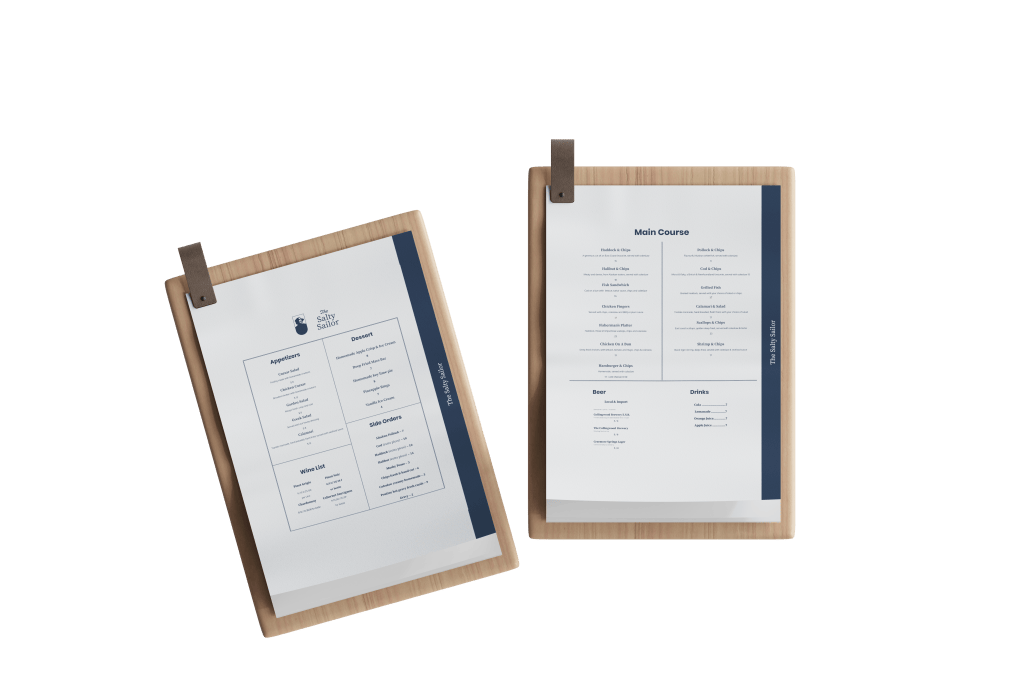
In This reading Steven Heller speaks about unconventional design. Heller describes the backlash that conventional designers throw towards designers that purposely break design rules in order to distinguish themselves from other designers and creating new design. The author states that these designs are fueled mostly by instincts rather than intelligence and discipline instead of an equal balance between these elements. He then proceeds to state that these unconventional designs tend to result in confusion.
I believe that design is effective as long as it draws out the desired emotions from its audience. Classic design standards or rules were created as a blueprint to guide newer designers, not confine them into a tight boring box. A designer should be able to express him or herself in any way that they seem fit to send the intended message across even if that means breaking a few rules. I think a design is ugly when there is not message, or the message is to hard to figure out.

This is an example post, originally published as part of Blogging University. Enroll in one of our ten programs, and start your blog right.
You’re going to publish a post today. Don’t worry about how your blog looks. Don’t worry if you haven’t given it a name yet, or you’re feeling overwhelmed. Just click the “New Post” button, and tell us why you’re here.
Why do this?
The post can be short or long, a personal intro to your life or a bloggy mission statement, a manifesto for the future or a simple outline of your the types of things you hope to publish.
To help you get started, here are a few questions:
You’re not locked into any of this; one of the wonderful things about blogs is how they constantly evolve as we learn, grow, and interact with one another — but it’s good to know where and why you started, and articulating your goals may just give you a few other post ideas.
Can’t think how to get started? Just write the first thing that pops into your head. Anne Lamott, author of a book on writing we love, says that you need to give yourself permission to write a “crappy first draft”. Anne makes a great point — just start writing, and worry about editing it later.
When you’re ready to publish, give your post three to five tags that describe your blog’s focus — writing, photography, fiction, parenting, food, cars, movies, sports, whatever. These tags will help others who care about your topics find you in the Reader. Make sure one of the tags is “zerotohero,” so other new bloggers can find you, too.
Have a WordPress.com account? Log in now.

